
Samsung Vision AI TV
TVs have remained passive while everything else became intelligent. Vision AI redefines the screen as a system that understands, responds, and turns what you watch into something you can act on.
Below is an excerpt from that work and here is a deep dive into process and execution.
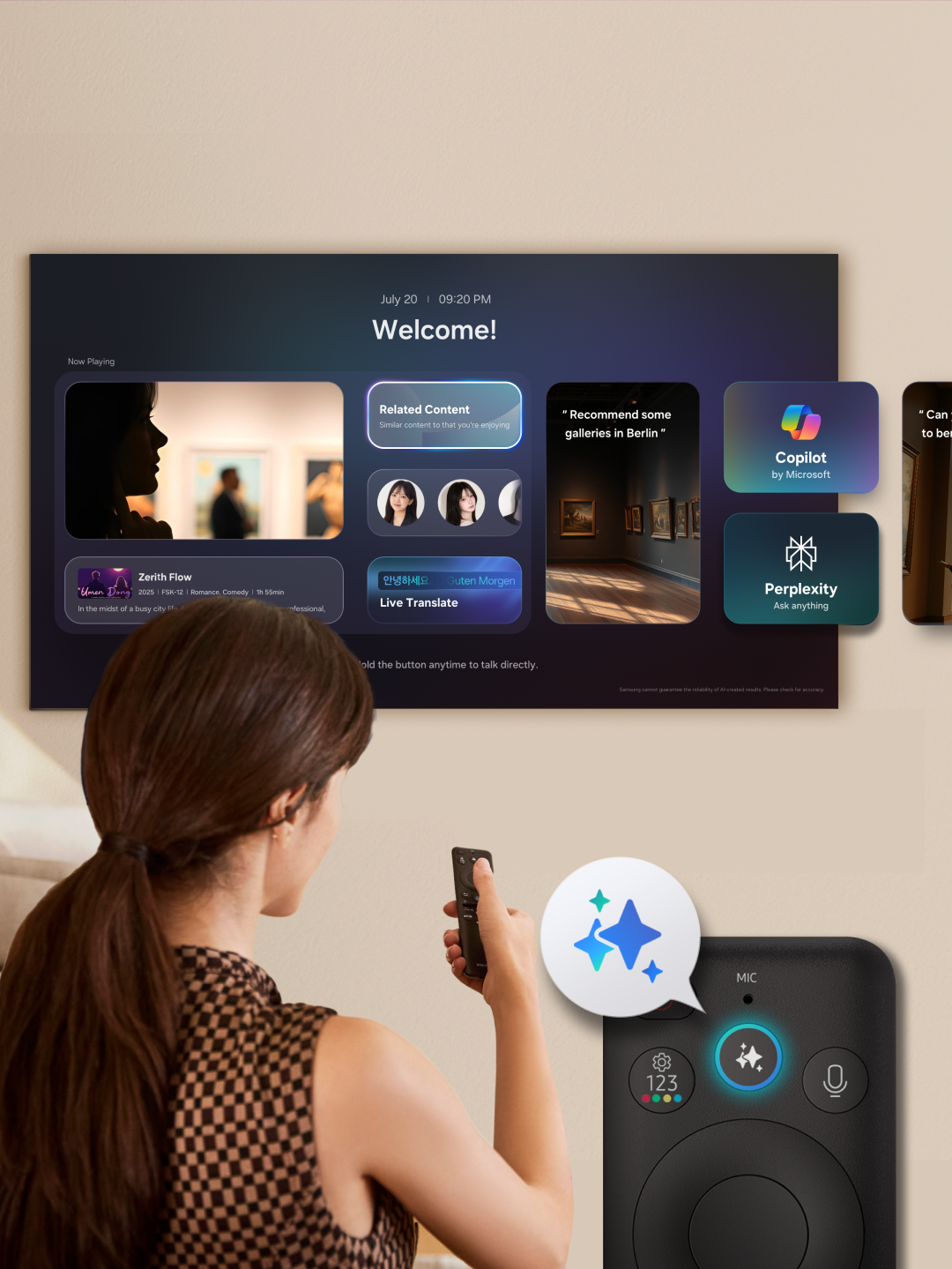
A conversational layer for content
Natural language unlocks deeper understanding, enabling users to ask, refine, and explore without leaving the experience.
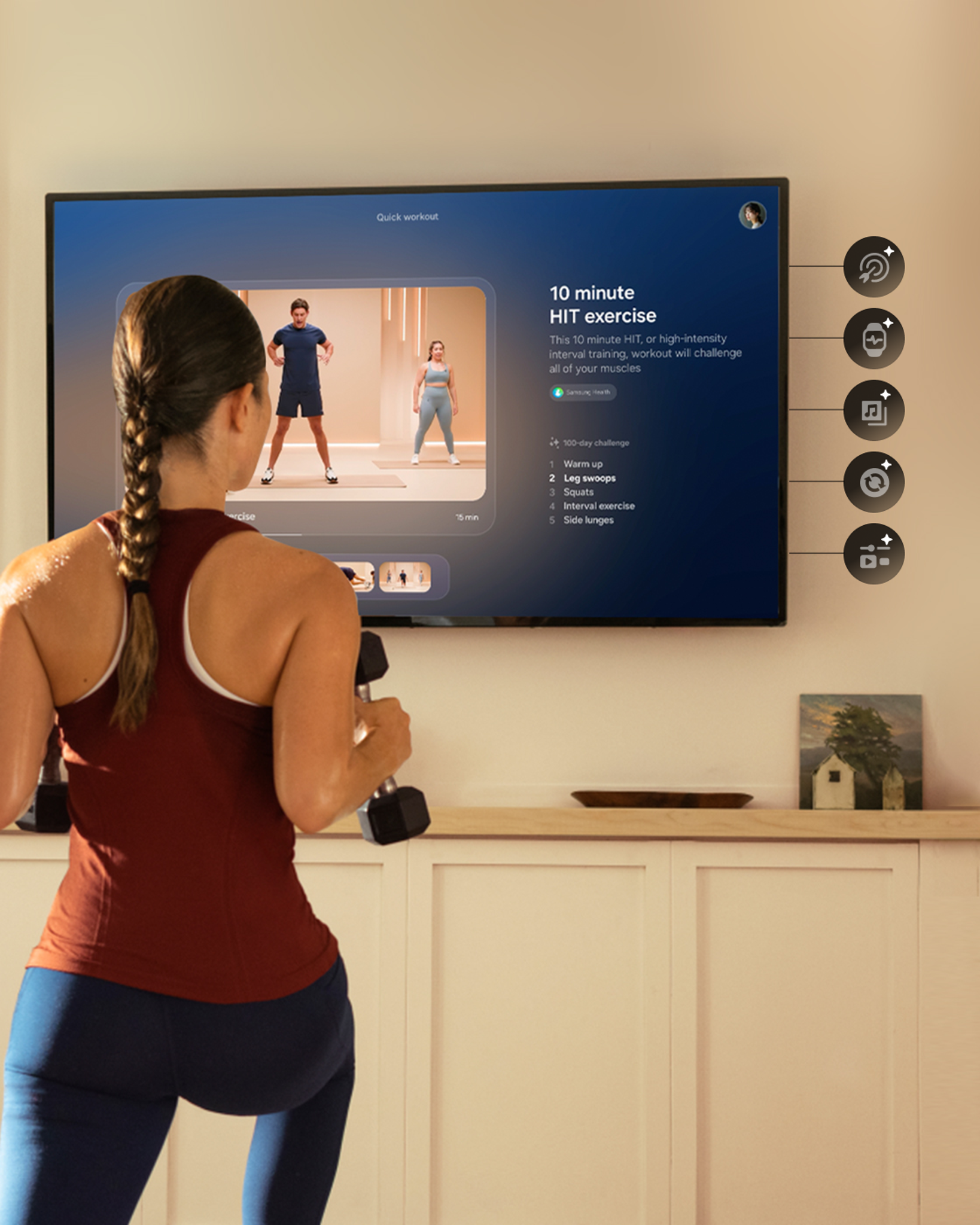
An adaptive system, not a static screen
Connected devices feed biometric signals into the experience, allowing AI to dynamically adapt content and guidance to each individual.
Watching becomes doing
What starts as passive viewing evolves into interactive discovery driven by context-aware AI.
The Shift
Watching has long been a one-way experience, limited to browsing and recommendations. Vision AI transforms the TV into an active participant—one that interprets content, surfaces meaning, and invites deeper exploration. It moves beyond passive consumption, enabling users to engage with what they watch in more contextual, personal, and actionable ways.
My Contribution
I led the definition of how AI should behave on large, shared screens - shaping the strategic vision and experience framework that positioned the TV as an intelligent, context-aware companion. I translated this into future-state concepts and interaction models that reimagined content as a starting point for exploration, discovery, and action.
To ground this vision, I led qualitative and large-scale quantitative research to identify high-value user needs and validate emerging behaviors. I also created concept narratives, prototypes, and experience frameworks that aligned stakeholders and contributed to Vision AI’s direction showcased at CES.
Express intent, not keywords
Move beyond searching for content and toward expressing intent - where the system helps you find what you didn’t yet know how to ask for.